
Law Reform: Justice Conducted by the People
Justice should be understandable, affordable and accessible. It should protect the rights of every person while ensuring that governments, corporations and public officials can be held accountable under the same law as everyone else.
Modern legal systems contain important protections, but they have also become expensive, slow and difficult for ordinary people to understand. Lengthy proceedings, complicated legislation and the dominance of legal professionals can leave people feeling that justice belongs to governments and institutions rather than the community.
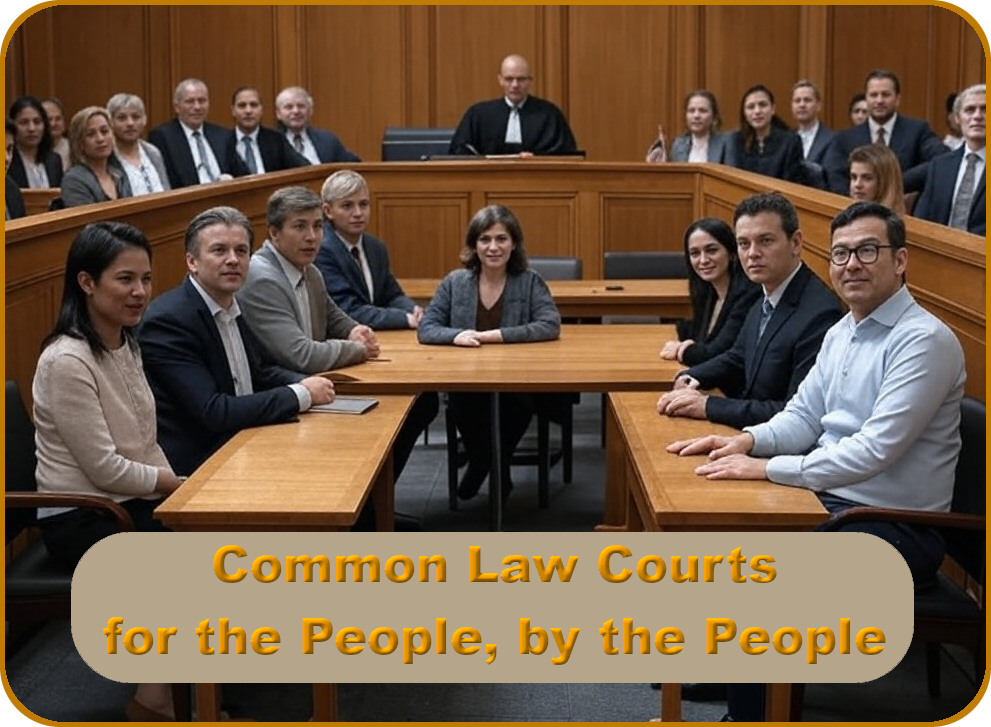
FuturePlan proposes a carefully structured common-law approach in which citizens participate directly in grand juries, trial juries and community justice processes. The person making a claim or levelling a charge and the person answering it would present their own evidence directly to a jury of their peers.
Lawyers could advise the parties on points of law, but they would not control the proceedings or address the court. This would return the facts, the evidence and the search for truth to the people directly involved.
The Principles of Common-Law Justice
A people-centred common-law system should be founded upon clear principles that apply equally to citizens, governments, public officials and corporations.
- No person, government, corporation or institution is above the law.
- A person is presumed innocent unless guilt is proved beyond reasonable doubt.
- No person should be punished without being told the allegation and given a fair opportunity to answer it.
- A person who makes a claim or levels a charge must provide evidence supporting it.
- Anyone who causes unlawful harm should be responsible for providing an appropriate remedy.
Common law is based upon the understanding that people are born with inherent rights and that no government, institution or individual has a natural right to dominate another. The purpose of law is to protect people from harm, provide a remedy when harm occurs and maintain peace and justice within the community.
Community Assemblies and Law Reform
People could participate in justice reform through elected local assemblies. These assemblies could examine problems, receive public submissions and propose improvements to common-law courts and community justice services.
A community assembly could nominate suitable citizens for grand-jury service, trial-jury administration, mediation and other community roles. However, the assembly itself would not determine the guilt of an accused person.
Citizens would remain free to form assemblies, gather evidence, investigate alleged wrongdoing and petition appropriate authorities. Grand juries and common-law courts would provide a structured process through which serious claims could be examined by the people.
The Practical Experience of Community Grand Juries
Grand juries are no longer commonly used in many modern countries. Nevertheless, initiatives documented by UCSA Land and Corruption Whistleblower have demonstrated that citizens can organise and conduct community grand juries that receive evidence, hear testimony, deliberate upon allegations and produce findings.
This practical experience demonstrates that ordinary people can participate responsibly in an organised evidence-review process. Citizens can examine documents, listen to testimony, question the reliability of evidence and decide whether a serious allegation should proceed.
Future reform could build upon this experience by establishing defined procedures, independent administration, reliable evidence standards and protections for complainants, witnesses and accused people.
What Is a Grand Jury?
A grand jury is an independent body of citizens convened to investigate an allegation and decide whether enough credible evidence exists for the matter to proceed to a common-law trial.
A grand jury does not determine whether an accused person is guilty. It does not conduct a criminal trial and does not impose punishment. Its purpose is to separate claims supported by credible evidence from unsupported, malicious or speculative accusations.
The grand jury considers whether the available evidence establishes reasonable grounds for requiring an accused person to answer the charge before a separate trial jury.
If the evidence is sufficient, the grand jury may issue a written presentment or indictment setting out the charge to be answered. If the evidence is insufficient, the jury may dismiss the complaint without preventing it from being reconsidered if substantial new evidence later becomes available.
How a Grand Jury Would Work
- Filing a complaint: A complainant would submit a signed statement and supporting evidence to an independent grand-jury registry.
- Administrative screening: A registrar would check whether the complaint is complete, falls within the jury’s jurisdiction and concerns conduct capable of amounting to an offence or actionable wrong. The registrar would not decide guilt or credibility.
- Random jury selection: At least 25 eligible citizens would be selected from a broad community roll. Jurors with personal, political, financial or other conflicts of interest should provide written reasons to explain why they should be excluded.
- Independent instructions: A neutral adjudicator or legal adviser would explain the applicable law, the evidentiary threshold and the grand jury’s limited role.
- Presentation of evidence: The jury could receive documents, recordings, sworn statements and witness testimony. Evidence would be recorded and assessed for relevance, reliability and corroboration.
- Witness examination: The person levelling the charge would present the complaint, call witnesses and explain the supporting evidence directly to the grand jury.
- Consideration of contrary evidence: Evidence that weakens or disproves the allegation must not be deliberately concealed. The grand jury could request additional evidence before reaching a decision.
- Private deliberation: Jurors would consider the evidence independently and without outside interference. Confidentiality could be used to protect witnesses and reputations during this preliminary stage.
- Evidence threshold: The jury would decide whether credible evidence establishes reasonable grounds for requiring the accused to answer the charge. It would not determine guilt.
- Written outcome: The grand jury would issue a recorded finding explaining whether the evidence was sufficient to support a presentment or indictment.
The grand jury would determine its finding through an independently recorded vote. The required majority and voting procedure would be published before proceedings began and would apply equally to every complaint.
Safeguards Against Misuse
A grand jury must not become a vehicle for political retaliation, personal revenge, public shaming or unsupported accusations. Strong safeguards would therefore be required.
- The presumption of innocence would apply throughout the proceedings.
- Jurors and administrators would disclose possible conflicts of interest.
- Anonymous allegations would require independent supporting evidence.
- Knowingly false evidence and witness intimidation would attract consequences.
- Evidence favourable to the accused could not be deliberately concealed.
- Witness privacy and safety would be protected where necessary.
- No person would be publicly declared guilty by a grand jury.
- A grand-jury finding could be reviewed where fraud, corruption or serious procedural misconduct was alleged.
Common-Law Courts Conducted by the People
If a grand jury found sufficient evidence to support a charge, the matter could proceed to a common-law court conducted before a separate and impartial trial jury.
The citizens who served on the grand jury would not sit on the trial jury. The grand jury decides only whether there is a case to answer. The trial jury listens to the complete case and determines whether the charge has been proved.
The common-law court would operate openly and according to established procedures. It would not be controlled by lawyers or legal institutions. The people directly involved would speak for themselves, present their own evidence and answer questions about their claims.
Who May Speak to the Court?
Only the person making the claim or levelling the charge and the person answering the claim or charge may present their respective cases to the common-law court.
In a criminal matter, the person levelling the charge would present the accusation and supporting evidence. The accused would personally answer the charge, challenge the evidence and present evidence in defence.
In a civil matter, the plaintiff would present the claim and evidence of the alleged harm. The defendant would answer the claim and present any evidence supporting the defence.
Witnesses could give their own testimony and answer appropriate questions. They would speak only about facts within their knowledge and would not act as advocates for either party.
The Role of Lawyers
A lawyer would not be permitted to speak to the court, address the jury, present evidence, question witnesses or argue the case on behalf of another person.
A plaintiff, complainant, defendant or accused person could have a lawyer or knowledgeable adviser seated beside them. The adviser could provide private advice on points of law, court procedure, the relevance of evidence and questions the person may wish to ask.
After receiving that advice, the plaintiff, complainant, defendant or accused person would speak for themselves. This prevents proceedings from being taken over by professional advocates and ensures that the jury hears directly from the people involved.
A person would also be free to proceed without a lawyer. Plain-language procedures and assistance from the court registrar would help every participant understand the stages of the case.
The Trial Jury
A trial jury of twelve citizens would hear the evidence, observe the witnesses, consider the answers given by both sides and determine the facts. Jurors would be selected independently from the community.
Anyone with a possible personal, political, financial or other conflict of interest would be required to disclose it. Any request to exclude that person would require reasons and would be decided before the trial began.
Jurors would not conduct their own private investigation, search for information online or discuss the case with outsiders. Their verdict would be based only upon evidence openly presented and tested in the common-law court. They may, however, ask the protagonists in a case questions to clarify any statements or evidence presented.
In a criminal proceeding, the charge would have to be proved beyond reasonable doubt. The accused would remain innocent unless and until the jury determined that the evidence met that standard.
The Role of the Adjudicator
A neutral adjudicator would maintain order, explain the applicable law and ensure that the established court procedure was followed. The adjudicator would not determine guilt and would not direct the jury towards a particular verdict.
The adjudicator could explain the legal meaning of the charge, identify the facts that must be proved and rule on whether proposed evidence was relevant to the matter before the court.
The adjudicator would ensure that each party had a reasonable opportunity to speak, present evidence, call witnesses and answer the other side. The adjudicator could ask questions to clarify the evidence but could not become an advocate for either party.
Adjudicators would be required to demonstrate knowledge, independence and good character. They would be subject to transparent appointment, recusal, review and removal procedures.
Presenting and Testing Evidence
The person levelling a charge or bringing a claim would present each item of evidence and explain why it was relevant. The accused or defendant could challenge that evidence, question the person presenting it and identify inconsistencies or missing information.
The accused or defendant could then present evidence in answer. The complainant or plaintiff would have an equal opportunity to question that evidence.
Documents, recordings, photographs and other material would need to be identified and authenticated. Testimony would be given under an affirmation to tell the truth. The jury would decide how much weight should be given to each piece of evidence.
Basic Rights in a Common-Law Trial
- Clear notice of every allegation or claim.
- Reasonable time to prepare an answer.
- Access to the evidence relied upon by the other party.
- The right to speak and present evidence personally.
- The right to have a lawyer or adviser seated beside the person to provide private advice.
- The right to call and question witnesses.
- The right to challenge evidence presented by the other party.
- The right to an independent jury drawn from the community.
- The right to remain silent in a criminal proceeding.
- The right to seek review where corruption or serious procedural injustice occurred.
Civil Disputes and Remedies
Common-law courts could hear disputes concerning property, agreements, negligence, personal injury, government conduct and other forms of alleged harm.
The plaintiff would be responsible for presenting the claim and proving that the defendant caused an identifiable harm or failed to honour a lawful obligation. The defendant would have the opportunity to answer every part of the claim.
In most civil matters, the jury would determine the claim on the balance of probabilities. Remedies could include compensation, restitution, the return of property, correction of a record or an order requiring continuing harm to stop.
The purpose of a civil remedy should be to correct the wrong as far as reasonably possible, rather than provide an unjustified benefit or impose a punishment unrelated to the harm proved.
Sentencing and Restorative Justice
If an accused person was found guilty, any sentence would need to be proportionate to the seriousness of the conduct, the harm caused and any continuing danger to the community.
Restitution, rehabilitation, education, treatment and supervised community service could be used where appropriate. Imprisonment would remain available for serious offences and situations in which a person presented a substantial danger to others.
Restorative justice could allow a willing injured party to explain the harm suffered and participate in developing a suitable remedy. Participation would be voluntary. No person should be pressured to meet an offender, accept an apology or surrender the right to an appropriate remedy.
Community Sheriffs and Enforcement
Local communities could elect sheriffs to serve the people and carry out the lawful decisions of common-law courts. A sheriff would be accountable to the community rather than controlled by political or corporate interests.

Community sheriffs would be professionally trained and required to act peacefully wherever possible. Their responsibility would be to serve notices, protect court proceedings, bring accused people before the court when lawfully required and enforce the final orders of the court.
A sheriff would not determine guilt or impose a personal punishment. Enforcement action would have to follow a recorded court order, and the sheriff would be accountable for corruption, unnecessary violence or any deliberate abuse of authority.
Reviewing a Decision
A court conducted by the people must remain accountable for serious mistakes or misconduct. A party could request an independent review where there was evidence of jury tampering, corruption, concealed evidence, a serious conflict of interest or a substantial failure to follow the established procedure.
A review would not allow a dissatisfied party to disregard a verdict simply because the outcome was unfavourable. The person requesting review would need to identify the alleged wrongdoing and provide evidence supporting the request.
If the reviewing body found that the original proceeding had been corrupted or made fundamentally unfair, it could order that the case be heard again before a completely new jury.
Public Legal Education
Citizens cannot participate meaningfully in justice unless they understand their rights and responsibilities. Free public education would explain evidence, jury service, common-law procedure and the important difference between an allegation, a grand-jury indictment and a conviction.
Training would also be provided for adjudicators, registrars, sheriffs and jury administrators. The purpose of this training would be to help citizens perform their duties consistently without transferring control of the justice system to a professional legal class.
A Practical Path to Implementation
A national system of common-law courts would require clearly defined procedures, suitable facilities, trained administrators and widespread public education. Reform should therefore be introduced carefully and openly.
- Consult citizens, victims, community organisations and experienced common-law advocates.
- Examine the grand-jury experience of UCSA Land and Corruption Whistleblower.
- Publish proposed grand-jury and trial procedures for public review.
- Establish community education and practical jury-training programs.
- Conduct carefully monitored community grand-jury and court trials.
- Measure fairness, accessibility, cost, consistency and public confidence.
- Use constitutional congresses to develop any necessary constitutional reforms.
- Submit major constitutional changes to the people through binding referendums.
Returning Justice to the People
Community grand juries have already demonstrated that ordinary people can assemble, receive evidence, hear testimony and deliberate seriously about allegations of wrongdoing.
A properly structured common-law system would extend that principle into courts conducted by the people. The person levelling a charge and the accused would speak directly to the jury. Lawyers could advise them privately but could not take control of the court or speak in their place.
The jury would listen to the evidence, determine the facts and deliver its verdict. The adjudicator would maintain order and explain the law, while an elected sheriff would carry out the lawful decisions of the court.
This would create a justice system in which citizens are not merely observers. They would become active guardians of justice, equality and the rule of common law.