
Who Are We and What Are Our Aims?
FuturePlan is an independent grassroots movement promoting freedom, fairness, responsibility and government that remains answerable to the people.
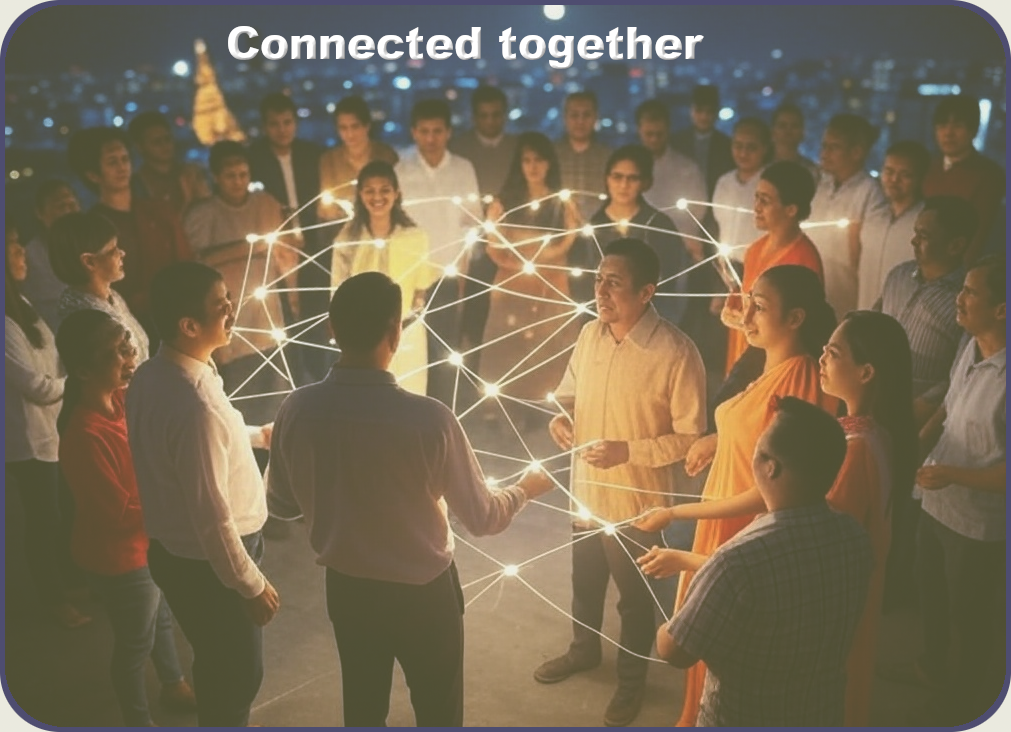
We believe ordinary people should have a meaningful voice in the decisions affecting their lives—not only at elections, but whenever important laws, public policies and constitutional changes are being considered.
FuturePlan does not claim to have every answer. It presents a connected framework of ideas for people to examine, question and improve. Any lasting reform must be understood and approved by the people who will live under it.
FuturePlan began in Australia, but its principles are intended for people everywhere. Each proposal can be examined and adapted according to the laws, constitution, culture, resources and circumstances of each country.
Our Foundation
Freedom
Every person should be free to speak, think, question, worship, associate, work and live according to their own conscience, provided they do no harm to another person and accept responsibility for their actions.
Freedom of speech is essential. Without it, people cannot expose corruption, question government, debate difficult issues or correct mistakes. A nation cannot remain free and prosperous when only approved opinions may be expressed.
Rights must be protected by clear constitutional safeguards and fair legal processes. They should not depend upon the goodwill of a political party, public official, corporation or temporary majority.
Fairness
Fairness means equality before the law and a genuine opportunity for every person to build a worthwhile life. It does not mean forcing everyone to become the same or guaranteeing identical outcomes regardless of effort, ability or conduct.
People should be judged according to their actions and abilities—not their race, sex, religion, wealth, political connections or social background. Public institutions must apply their rules consistently and provide an effective process for challenging unfair decisions.
Responsibility
Freedom and responsibility belong together. People should take responsibility for their choices, respect the equal rights of others and repair harm they have caused wherever possible.
Government representatives, public servants and corporations must also be responsible for their actions. Authority should never place a person or organisation beyond investigation, accountability or the law.
Political Authority Belongs to the People
In most modern political systems, citizens choose representatives every few years but exercise little control over them between elections. Political parties usually decide which issues will be debated, which laws will be introduced and which constitutional proposals will be placed before the public.
FuturePlan proposes a different relationship:
The people are the source of political authority. Representatives and public institutions exercise only the powers entrusted to them and must remain answerable to the people they serve.
This does not mean abolishing every public institution or asking citizens to administer every government department. It means giving people lawful and practical ways to propose change, examine official decisions, remove representatives who seriously fail in their duties and make the final decision on matters of major public importance.
The Five-Step FuturePlan
The FuturePlan brings five major reforms together. Each step supports the others and would require detailed examination, independent testing, public debate and lawful implementation.
Step 1: Put Political Power into the Hands of the People
Citizens Initiated Referendums would allow citizens to propose a new law, amend or repeal an existing law, or propose a constitutional change. A proposal receiving the required verified public support would proceed to an informed and binding public vote.
A responsible CIR process would require one clearly defined subject, lawful wording, independent assessment, transparent campaign funding, reliable information and a fair period for public debate.
Citizens would also have a clearly regulated process for recalling and replacing representatives who seriously failed to perform their duties or lost the confidence of their electorate.
Switzerland provides useful evidence that citizen-initiated constitutional proposals can operate alongside representative government. Its system is not identical to the FuturePlan proposal, but it offers lessons about public participation, signature requirements and binding referendums.
Step 2: A Free Digital Participation and Voting App
The first version of the FuturePlan app would provide public education, discussion and clearly identified non-binding opinion polls. It would help citizens become familiar with examining individual issues rather than voting only for a political party’s complete package of policies.
A later version could conduct binding public votes only after the people had lawfully authorised the system and it had passed independent tests for security, privacy, accessibility, ballot secrecy and election integrity.
No technology, including blockchain, should be described as unhackable. A trustworthy voting system must protect the whole process: voter eligibility, personal devices, anonymous ballots, counting, auditing, dispute resolution and access for people who cannot or do not wish to vote through a smartphone.
Step 3: Electoral and Constitutional Reform
FuturePlan proposes small local electorates of approximately 5,000 voters. This would give communities a better opportunity to know their representatives, question them directly and replace them through a fair recall process when necessary.
Local electorates would combine into regions. Voters would directly choose their regional and national representatives instead of allowing political parties or regional representatives to make that decision for them.
Constitutional congresses would bring citizens together to examine their existing system, debate possible reforms and prepare clear proposals. A congress would not impose a new constitution. The people of that country would make the final decision through an appropriate binding referendum or other lawful public process.
Step 4: Eliminate Personal Taxation
People should keep what they earn. FuturePlan proposes progressively removing personal income taxes, broad consumption or sales taxes, personal tax returns and recurring household charges for essential public utilities.
This change cannot responsibly occur overnight. Replacement revenue must first be independently modelled, publicly examined and proven sufficient to fund healthcare, education, infrastructure, essential utilities and other necessary public services.
Commercial enterprises would make a National Business Contribution based on properly calculated commercial profit. Verified Contribution Passports would recognise legitimate business inputs and prevent the same value from being charged repeatedly as products and services move through the supply chain.
Step 5: National Service, Defence and Economic Renewal
A paid voluntary National Service and Resilience Program would allow people to serve through military or civilian roles while gaining practical skills, work experience and recognised qualifications.
A professional defence force supported by a properly trained citizen reserve would protect the country under constitutional and democratic control. Each nation could cooperate with trusted international partners while rebuilding its domestic ability to manufacture, operate, maintain and replenish essential equipment.
Domestic-first procurement, adapted to each country’s needs and lawful obligations, would help regenerate manufacturing, engineering, research, farming, transport, energy, trades and regional industry. Overseas equipment would be used where suitable domestic manufacture was genuinely unavailable within the time required.
What FuturePlan Is Working Toward
Democratic Reform
- Citizen authority: Practical processes through which citizens can propose and decide important public changes.
- Accountable representation: Local representatives who report to their communities and remain subject to recall.
- Constitutional protection: Clearly defined powers, protected rights, due process and equality before the law.
- Open government: Published budgets, contracts, evidence, decisions and independent audits.
- Informed participation: Public education and balanced information before binding decisions are made.
National Renewal
- Economic independence: Rebuilding domestic manufacturing, skills, research and essential supply chains.
- Fair public revenue: Removing personal taxation only as a proven replacement becomes dependable.
- Essential services: Reliable healthcare, education, energy, water and infrastructure funded transparently.
- National resilience: Prepared communities capable of responding to disasters, emergencies and threats.
- Personal liberty: Government that protects rights without unnecessarily controlling private life.
Education Must Come Before Lasting Reform
Giving people more authority also gives them more responsibility. Citizens need access to clear information, different points of view and the evidence behind important proposals.
Civic education should begin in primary school with simple lessons about honesty, responsibility, respectful disagreement and the rights of others. As students grow older, this education should expand to include law, government, constitutional principles, economics, media literacy and the careful assessment of evidence.
Teachers would need suitable training so that they understood the principles they were teaching. Education must help students think for themselves. It must never become political indoctrination or a method of teaching children what opinions they are permitted to hold.
Freedom of Speech and Social Cohesion
A peaceful community requires respect between people of different backgrounds. Government can provide education about racism, prejudice, social cohesion and responsible conduct, but it should not attempt to manage every private belief, relationship or conversation.
People must remain free to discuss controversial subjects, criticise institutions and express unpopular opinions. Speech that directly threatens, incites or forms part of a genuine criminal attack can be dealt with through clear law and due process. Mere disagreement, criticism or offence must not be treated as harm.
Where a new law is genuinely required, citizens must be able to examine the exact wording, evidence, purpose and likely consequences. Laws affecting fundamental rights should not be created through vague language, hidden amendments or political slogans. The people must have a meaningful say in the final law placed before them for approval.
Government Must Be Open and Accountable
Government should perform the responsibilities entrusted to it efficiently and openly. It should protect the nation, maintain essential infrastructure, administer fair laws and provide necessary public services.
It should not interfere unnecessarily in peaceful private life or use public money to reward political supporters. Every substantial public program should have a clear purpose, published cost, measurable result and independent review.
Citizens must be able to investigate government decisions, question representatives, expose wrongdoing and propose corrections. Whistleblowers who reveal credible evidence of corruption or serious public misconduct must be protected from retaliation.
Protecting Rights While Exercising Majority Rule
Direct democracy does not mean that a temporary majority should be able to remove the basic rights of another person or group. Freedom, lawful property, equality before the law and due process require firm constitutional protection.
Public proposals should therefore be examined for clarity, legality and their effect on fundamental rights before a binding vote. The reviewing body would not be permitted to reject a proposal merely because government officials or political interests disliked it.
When rights appear to conflict, decisions should apply the principles of evidence, proportionality, due process and responsibility for actual harm. Government convenience must never be enough to remove a fundamental liberty.
A Practical and Peaceful Transition
FuturePlan does not propose reckless change or the sudden destruction of services upon which people depend. Major reforms would be introduced carefully.
- Education and discussion: Explain the proposal in plain language and invite criticism, alternatives and improvements.
- Independent examination: Test the legal, financial, technical and practical consequences.
- Limited trials: Test suitable systems on a small scale before relying upon them nationally.
- Public approval: Place completed major reforms before informed citizens through the appropriate binding process.
- Review and correction: Publish the results, identify failures and allow the people to amend or repeal measures that do not work.
Existing institutions and laws would remain in operation until lawful replacements were ready. Essential services, legal rights and public safety must not be placed at risk during the transition.
FuturePlan Is an Invitation
These proposals are not commandments and FuturePlan is not asking people to accept them without question. We want citizens to examine the ideas, identify weaknesses, propose better safeguards and help build a system worthy of public trust.
Disagreement is not an obstacle to this work. Honest disagreement is how weak ideas are exposed and stronger proposals are developed. What matters is that discussion remains peaceful, evidence is available and every person’s equal rights are respected.
A healthy nation is not built by waiting for a perfect political leader. It is built by informed people who accept responsibility for their communities and retain the lawful power to correct their government.
Common Law and Community Education
Common law principles have helped shape ideas such as equality before the law, trial by jury, due process, protection of lawful rights and responsibility for harm caused to another person.
Our associate website, CommonLaw.Earth, provides education about common law, personal rights, individual responsibility and community assemblies. Select the image below to learn more.
Together, We Can Build Something Better
Learn about the proposals. Question them. Improve them. Share them. The future should be decided by informed people—not handed down to them.
Common Law Courses available at CommonLaw.Education
  |  |  |  |